

For years, I treated peace as something waiting for me on the other side of my problems.
Once work became less stressful, I would feel peaceful.
Once the difficult conversation was over, I would relax.
Once my health felt better, my relationships were settled, my plans became clearer, and the uncertainty disappeared, then I could finally exhale.
There was only one problem.
Life never completely settled down.
One concern would resolve itself, and another would appear. A peaceful week could be followed by an unexpected phone call. A plan I felt certain about could suddenly change. Even during some of the happiest periods of my life, there were still bills to pay, people to worry about, decisions to make, and questions I couldn’t answer.
Eventually, I began to wonder whether I had misunderstood peace.
Perhaps peace wasn’t what happened when life finally became quiet.
Perhaps peace was something I could learn to find while life was still happening.
The Conditions We Place on Peace
Most of us have an invisible list of conditions.
I’ll be okay when this is resolved.
I’ll relax when I know what’s going to happen.
I’ll feel safe when everything is under control.
The problem is that these conditions give the outside world enormous authority over our inner lives.
If peace depends on everyone behaving the way we want, circumstances unfolding according to plan, and the future becoming predictable, then peace will always be fragile.
There will always be something we cannot control.
Someone else’s decision.
Someone else’s opinion.
The economy.
The weather.
Our bodies changing.
The passage of time.
Trying to control all of it is exhausting.
I know because I’ve tried.
Peace Is Not Passivity
For a long time, I associated peace with withdrawing from difficulty.
Don’t argue.
Don’t become upset.
Don’t make trouble.
Stay calm.
But sometimes peace requires action.
Sometimes peace means having the conversation we’ve been avoiding.
Sometimes it means leaving an unhealthy situation.
Sometimes it means saying no.
Sometimes it means admitting that something isn’t working and asking for help.
Peace is not pretending everything is fine.
It is being grounded enough to meet what isn’t fine without allowing it to consume the whole of us.
That is a very different kind of calm.
The Space Around the Storm
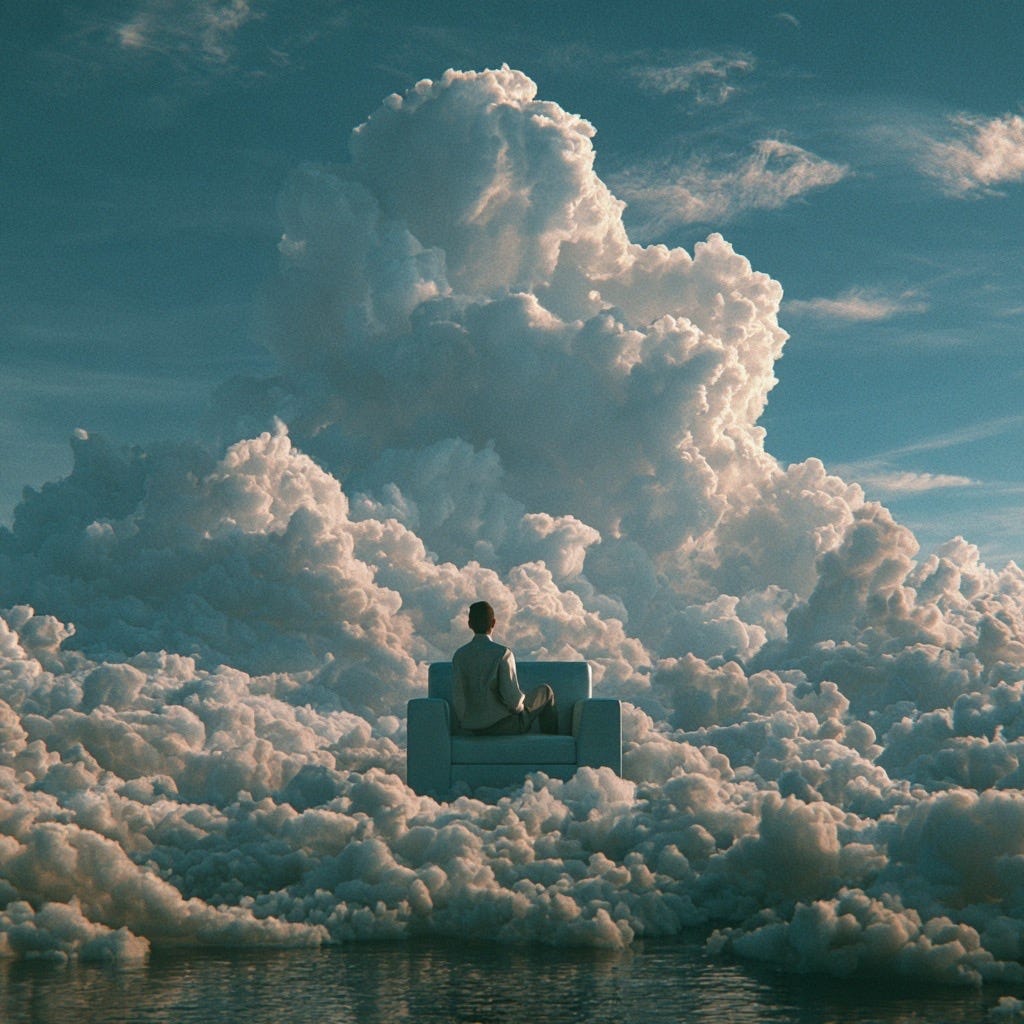
I’ve started thinking about peace as the sky rather than the weather.
Weather changes constantly.
Some days are clear.
Some days bring storms.
Clouds gather and disappear.
Wind rises and settles.
But the sky is larger than any single weather pattern moving through it.
Our inner lives can feel much the same.
Anxiety appears.
Anger appears.
Grief appears.
Joy appears.
None of them remain forever.
When I’m caught inside a difficult emotion, I sometimes forget this. The feeling becomes my entire world.
Awareness reminds me that there is space around it.
I can be anxious and still notice my breathing.
I can be grieving and still receive kindness.
I can be uncertain and still drink a cup of tea, take a walk, or laugh with someone I love.
The storm is real.
But it is not the whole sky.
The Peace We Stop Fighting For
There is another paradox I’ve been learning.
The harder I try to force myself to feel peaceful, the less peaceful I become.
I start monitoring myself.
Why am I still anxious?
Why can’t I let this go?
Shouldn’t meditation be helping?
Suddenly peace becomes another achievement I am failing to attain.
The Heart Sutra offers a different direction.
No attainment.
Nothing to attain.
Perhaps peace isn’t something we manufacture.
Perhaps it appears naturally when we stop fighting every experience that doesn’t look peaceful.
A difficult thought can be here.
A difficult emotion can be here.
Uncertainty can be here.
And somewhere underneath all of it, we can still breathe.
Finding Peace in Ordinary Places
These days, peace often finds me in surprisingly ordinary moments.
Walking without needing to get anywhere quickly.
Sitting quietly before everyone else wakes up.
Cooking.
Looking out a window.
Talking with someone who doesn’t require me to perform.
Sometimes it lasts five minutes.
Sometimes only a few seconds.
I’ve stopped demanding that it stay.
That, strangely enough, has made it easier to recognize when it arrives.
Peace doesn’t have to become permanent before it becomes meaningful.
Neither does happiness.
Neither does anything else.
A Thought to Carry Into the Week
The next time life feels unsettled, notice whether you are telling yourself:
“I can be peaceful once this is over.”
Then try something different.
Take one slow breath and ask:
“Is there even a small amount of peace available to me right now?”
Perhaps it is in your breathing.
Perhaps it is in the chair supporting your body.
Perhaps it is knowing that you don’t have to solve everything in this exact moment.
Let that small space be enough.
You don’t need the entire world to become quiet.
Sometimes becoming your own healer means discovering that even while life continues moving around you, there is a place within that doesn’t have to move quite so quickly.