What We Inherit, What We Choose
Families pass down more than traits: love, survival patterns, and stories. Understanding their origins helps us honor what served us while choosing what changes.

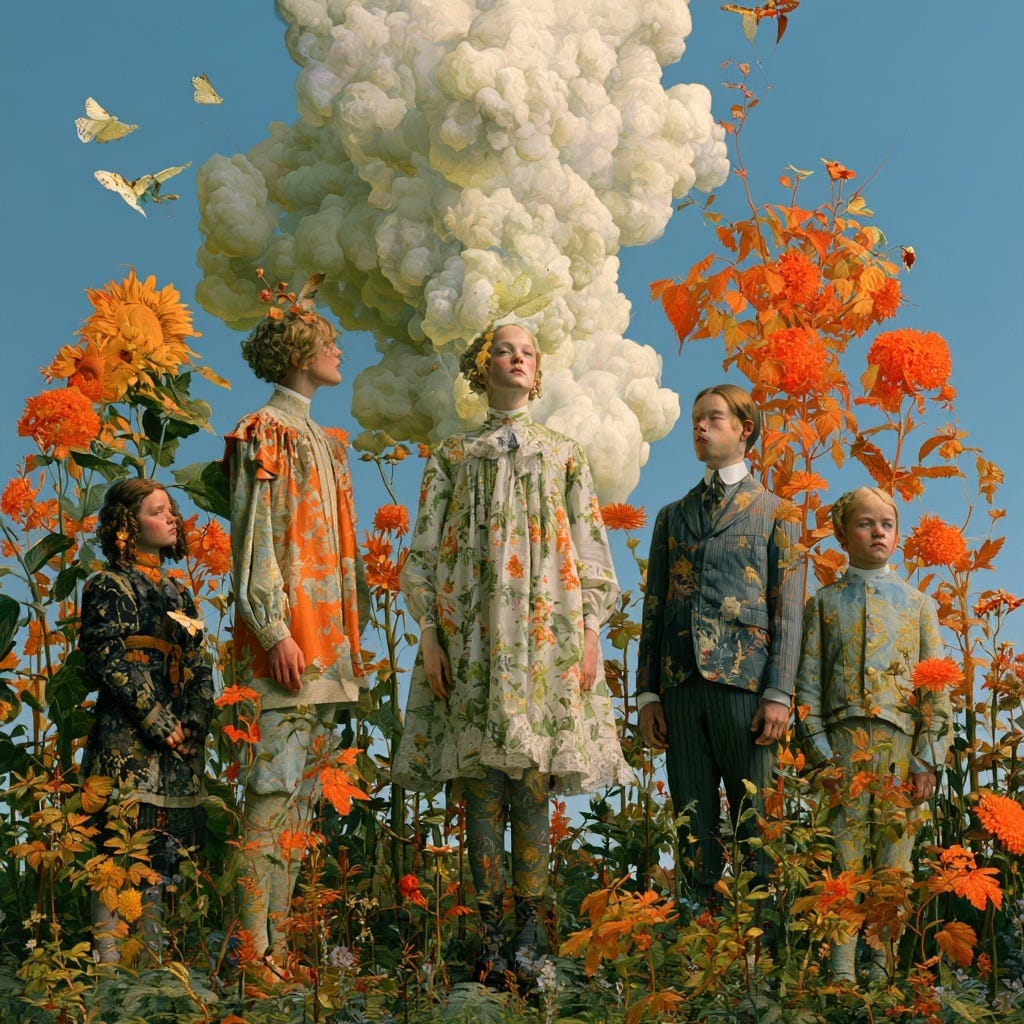
The older I become, the more often I recognize my family in myself.
Sometimes it is something small. A phrase I suddenly realize I’ve heard all my life. A particular way of preparing food. A habit around money, work, hospitality, or showing affection. Sometimes I catch an expression on my own face and briefly see someone from another generation looking back at me.
Other inheritances are harder to see.
How comfortable are we with saying, “I love you”?
What happens in the family when someone is angry?
Do we talk about difficult things, or quietly move past them?
Is success celebrated, expected, or necessary for approval?
What were we taught about money, relationships, gender, duty, shame, grief, and belonging?
No one needs to sit us down and formally teach these things. Children are extraordinary observers. We learn what a family believes partly by watching what everyone does.
Years later, we may discover that some of those lessons are still living through us.
The Family We Carry
When we think about inheritance, we usually think about physical traits.
Our eyes.
Our hair.
Our height.
Certain aspects of our health.
But families also pass down ways of living.
Recipes.
Languages.
Traditions.
Humor.
Stories.
Ways of showing love.
Ways of surviving hardship.
And sometimes, patterns that were useful in one generation become burdens in another.
A grandparent who lived through poverty may have learned never to waste anything. That behavior may have helped a family survive.
A parent who experienced instability may place enormous importance on security.
Someone who grew up in an environment where emotions were rarely discussed may genuinely love their children while having no idea how to talk about feelings.
When we look backward with enough context, many family patterns begin to make sense.
That doesn’t mean every pattern should continue.
Understanding is not the same as repeating.
Some Patterns Are Older Than We Are
There have been moments when I’ve wondered why certain beliefs felt so deeply rooted in me.
Then I began asking a different question.
Is this entirely mine?
Sometimes the answer is complicated.
Perhaps a fear developed through my own experience but was reinforced by messages I heard growing up. Perhaps an expectation I placed on myself came partly from family, partly from culture, and partly from the choices I made later.
Human beings cannot be reduced to one cause.
Still, looking at the larger story can be liberating.
It helps us replace blame with understanding.
Our parents were shaped by their parents.
Their parents were shaped by another time, another economy, another culture, another set of struggles.
Every generation receives something unfinished.
And every generation decides, consciously or not, what it will carry forward.
You Can Keep the Love Without Keeping Everything Else
Generational healing is sometimes described as breaking a cycle.
I like that idea, but I also think healing involves choosing what deserves to remain.
Not everything we inherit needs to be released.
Some things deserve to be protected.
The food.
The stories.
The resilience.
The humor.
The sacrifices made so another generation could have opportunities that were once impossible.
The ways people cared for one another even when they didn’t have the language we use today.
Healing doesn’t require rejecting where we came from.
Sometimes it means loving our families enough to say:
This part continues with me.
This part ends with me.
Compassion Without Excusing Harm
Understanding why someone behaved a certain way doesn’t make harmful behavior acceptable.
This distinction matters.
A person’s history may explain their actions without erasing their responsibility for them.
We can have compassion for what previous generations endured while also acknowledging what those experiences created in the generations that followed.
Both truths can exist together.
Perhaps mature healing allows us to say:
“I understand more about why this happened, and I am choosing something different.”
That is not betrayal.
It is growth.
Becoming a Turning Point
One of the most hopeful realizations I’ve had is that inheritance is not destiny.
Patterns can change.
A family where emotions were never discussed can produce someone who learns to speak honestly.
A history of conflict can produce someone committed to peaceful communication.
A pattern of shame can slowly become a culture of acceptance.
Sometimes healing one person changes the emotional possibilities available to everyone who comes after them.
We may never know how far that influence travels.
The Heart Sutra and the Family Story
The Heart Sutra teaches that nothing exists independently.
We arise through conditions.
Family is one of those conditions.
So is culture.
History.
Community.
The people who loved us and the people who struggled to love us well.
Seeing this doesn’t diminish our individuality. It gives our lives context.
We are part of a much larger story.
But interconnectedness does not mean repetition.
Conditions shape us.
They do not completely determine us.
Awareness gives us the possibility of choosing what happens next.
A Thought to Carry Into the Week
Think about something beautiful your family gave you.
A value.
A tradition.
A strength.
A way of caring.
Let yourself feel grateful for it.
Then consider one pattern you no longer want to carry in the same way.
You don’t have to condemn anyone.
Simply recognize it.
And quietly say:
I honor where I came from. I keep the wisdom and the love. What causes unnecessary suffering can change with me.
Perhaps becoming your own healer isn’t only about healing the life behind you.
Sometimes it is about becoming a turning point in a story much larger than your own.
Bernard, this is so moving and provocative. I've just shared it with many of my friends and neighbors! You have hit the perfect note, creating in the reader with an open heart many many moments of resonance. So many truths to be revealed, so much healing and growth offered here. You are a cherished friend and am so happy your gifts are becoming available to the world to partake in. Love and Blessings to you Bernard! Peg