

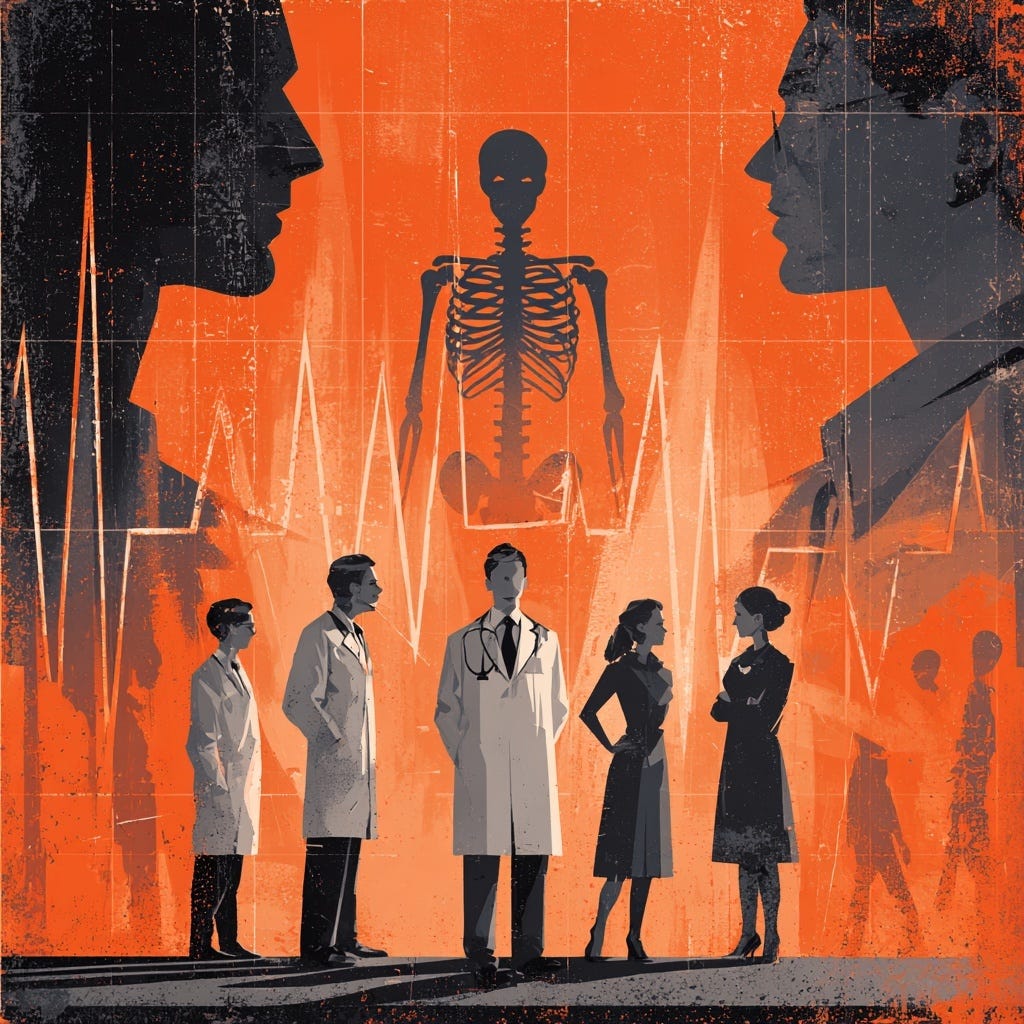
One thing I’ve been realizing more and more lately is this:
A lot of people are not just carrying personal pain.
They’re carrying inherited pain.
Family trauma.
Emotional survival patterns.
Generations of fear, silence, addiction, emotional suppression, displacement, poverty, abuse, stress, and survival mode.
And eventually…
the body starts carrying it too.
Sometimes through anxiety.
Sometimes through chronic illness.
Sometimes through nervous system dysregulation.
Sometimes through emotional numbness people can’t even explain.
The more healing work I do, the harder it becomes to separate physical health from emotional and generational history.
The limitation of symptom-based healthcare
Most healthcare systems today are still primarily designed around:
Diagnosing symptoms
Managing symptoms
Stabilizing symptoms
And while that absolutely has value, many people still leave feeling:
Unseen
Emotionally unsupported
Confused about why they feel the way they do
Because healing isn’t always just chemical or physical.
Sometimes someone’s body has been living in survival mode for decades.
Sometimes the nervous system never truly learned safety.
Sometimes trauma patterns have been passed quietly from generation to generation without anyone fully realizing it.
The body remembers what the mind tries to forget
One thing I’ve noticed repeatedly in healing sessions is this:
People often normalize suffering they’ve carried for years.
Constant tension.
Hypervigilance.
Emotional shutdown.
Digestive issues.
Sleep problems.
Burnout.
They think:
“This is just who I am.”
But often, the body adapted to environments that never felt fully safe.
And eventually those adaptations become physical patterns.
Not because the body is broken.
But because it’s intelligent.
What compassionate healthcare could actually look like
I imagine a healthcare system where people are first understood as whole human beings.
Not isolated medical cases.
A system where someone’s healing plan considers:
Physical health
Emotional health
Trauma history
Nervous system regulation
Cultural background
Spiritual beliefs
Lifestyle and environment
Family and generational patterns
Not rushed appointments.
Not fragmented departments.
Actual integrated care.
Why traditional medicine still matters
One thing modern systems sometimes overlook is that many traditional healing systems evolved through centuries of observation, relationship with nature, and lived experience.
There is wisdom in:
Herbal medicine
Plant-based healing
Traditional Chinese medicine
Ayurveda
Indigenous healing practices
Energy medicine
Breathwork
Meditation
Acupuncture
Somatic healing
Spiritual counseling
Psychedelic-assisted healing in appropriate therapeutic settings
Not as replacements for modern medicine.
As complements.
Because healing can happen through many pathways.
The relationship between plants and healing
I honestly think humanity is only beginning to rediscover how intelligent nature actually is.
Plants have supported healing for thousands of years:
Calming the nervous system
Reducing inflammation
Supporting emotional regulation
Helping the body restore balance naturally
And beyond chemistry alone, many cultures historically approached plant medicine relationally—with respect, intention, and understanding that healing involves more than suppressing symptoms.
Modern science is now slowly beginning to validate many things traditional systems already observed generations ago.
The future feels integrative, not divided
I don’t think the future of medicine is:
“science versus alternative healing.”
I think that division eventually dissolves.
The future feels more collaborative.
Imagine healthcare teams including:
Doctors
Therapists
Herbalists
Nutritionists
Acupuncturists
Trauma specialists
Energy healers
Spiritual counselors
Somatic practitioners
AI-supported diagnostics systems
All working together to support one person.
Not dismissing each other.
Listening to each other.
Because someone healing from chronic illness or trauma may need multiple layers of support simultaneously.
Why trauma-responsive care changes everything
This part feels especially important.
A trauma-responsive healthcare system would understand that:
Many people do not feel safe in medical environments
Emotional history affects physical healing
Nervous system regulation impacts recovery
Compassion changes biological responses
Even the way practitioners speak to people matters.
The body responds differently when someone feels:
Safe
Seen
Heard
Respected
Emotionally supported
That alone can change healing outcomes significantly.
The cultural piece we often overlook
Not everyone relates to healing the same way.
Different cultures carry:
Different beliefs
Different healing traditions
Different relationships to spirituality, family, and emotional expression
A compassionate healthcare system wouldn’t force everyone into one standardized model.
It would honor cultural wisdom while still integrating scientific understanding.
Because healing becomes more effective when people feel their identity and lived experience are respected instead of erased.
The role of future science and AI
I also think future healthcare will expand dramatically through technology.
AI may eventually help:
Detect long-term trauma patterns
Analyze nervous system dysregulation
Personalize healing plans
Track emotional and behavioral health trends
Integrate multiple healing modalities together
At the same time, science will likely continue exploring:
Light therapy
Sound therapy
Biofrequency medicine
Psychedelic-assisted therapies
Neuroplasticity and trauma healing
Mind-body interactions
Not replacing human care.
Enhancing it.
Why community matters in healing
One thing I’ve realized deeply is this:
People heal differently in supportive environments.
Isolation often worsens suffering.
Community helps regulate people emotionally and biologically in ways we’re only beginning to understand.
Which means healthcare may eventually expand beyond clinics and hospitals into:
Community healing spaces
Group support systems
Preventative wellness programs
Emotional education
Shared healing environments
Healing becomes part of daily life instead of something people only seek during crisis.
What this is really about
If I strip everything down, I think this conversation is ultimately about remembering something simple:
Human beings are multidimensional.
Physical.
Emotional.
Mental.
Energetic.
Relational.
Spiritual.
And systems that only treat one layer will always feel incomplete.
Closing
I don’t think the future of healthcare is about rejecting modern medicine.
I think it’s about expanding our understanding of healing itself.
A future where:
Science and traditional wisdom coexist
Trauma is treated with compassion instead of shame
Plant medicine is respected responsibly
Emotional healing matters as much as physical recovery
Communities become part of the healing process
People are treated as whole human beings instead of disconnected symptoms
Because maybe true medicine begins the moment we stop asking:
“How do we silence the symptom?”
And start asking:
“What is this person’s body, heart, and life trying to communicate?”