

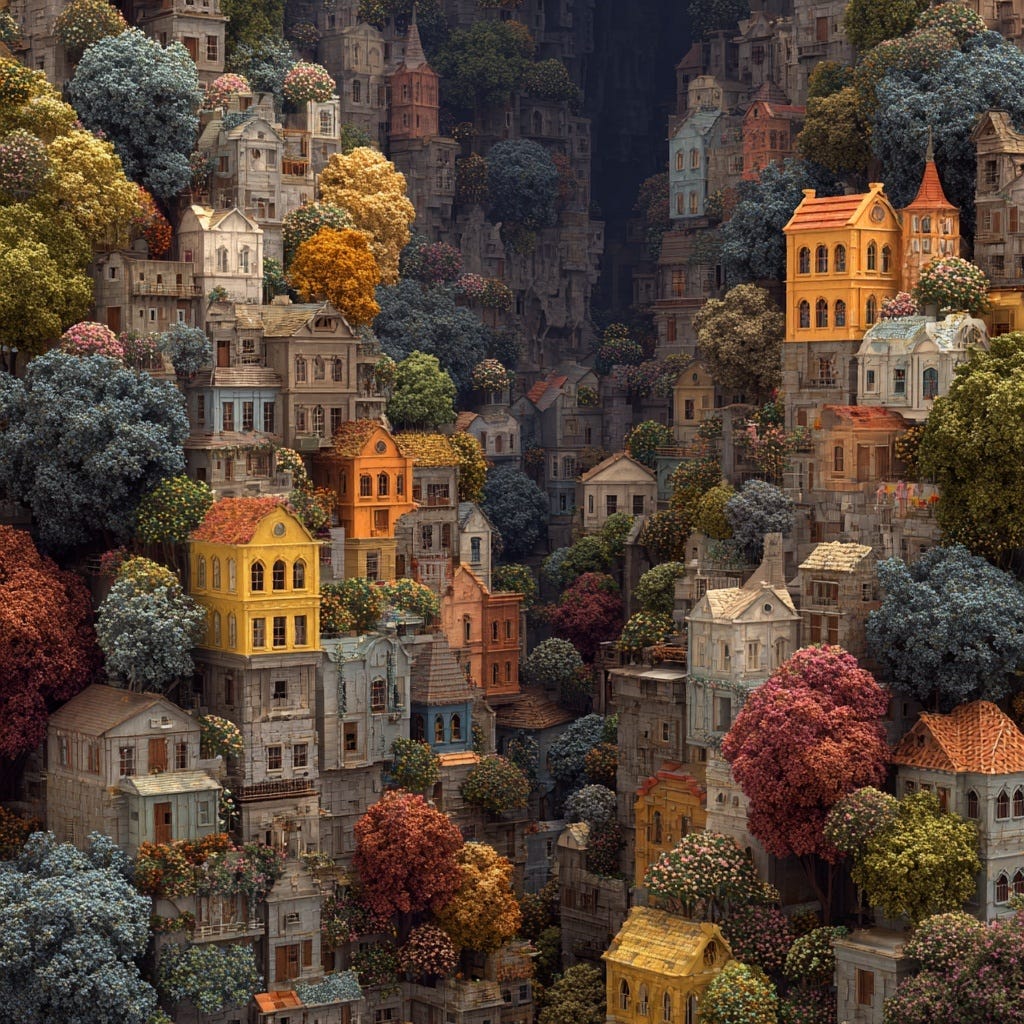
There was a moment not too long ago when I was walking through a park after a long week.
I remember noticing how quiet it felt.
Not peaceful quiet.
Empty quiet.
Fewer birds.
Less movement.
Something about the environment felt… thinner.
And maybe most people wouldn’t notice it.
But once you become sensitive to energy, patterns, and environments, you start feeling when something is out of balance.
Not just in people.
In nature too.
What I’ve been realizing lately
The more healing work I do, the more I notice the same truth repeating itself everywhere:
Nothing exists alone.
Not the body.
Not emotions.
Not communities.
Not ecosystems.
Everything is interconnected.
And when one part of the system is harmed long enough, eventually the imbalance spreads outward.
You can see it in people.
You can see it in cities.
You can see it in the Earth itself.
The way we’ve been taught to relate to nature
For a long time, we treated nature like it was separate from us.
Something “out there.”
A resource.
A commodity.
A thing to extract from.
And because of that mindset, entire ecosystems have been pushed beyond their limits.
Forests disappear.
Oceans struggle.
Species vanish quietly.
Sometimes before we even fully understand what role they played in the larger system.
What extinction actually represents
I used to think extinction was just biological loss.
Now it feels deeper than that.
Every plant.
Every animal.
Every ecosystem carries a function, a relationship, a form of intelligence within the web of life.
When something disappears, the system reorganizes around that absence.
And eventually, we feel that imbalance too.
Maybe not immediately.
But over time:
Soil weakens
Water quality changes
Food systems become unstable
Climate patterns shift
Human health declines
Because we were never separate from the environment to begin with.
What restoration could actually mean
When people hear “environmental restoration,” they often think of massive global projects.
And yes, those matter.
But I think restoration also begins locally.
It starts with communities reconnecting to the land they live on.
Paying attention again.
Asking:
What does this environment need?
What has been depleted here?
What would healing look like for this specific place?
Because every ecosystem has its own story.
And every community carries different wounds.
Why environmental justice matters
One thing that becomes obvious very quickly is this:
Environmental harm is rarely distributed equally.
The communities with the least resources often experience:
Worse pollution
Less green space
Poorer air quality
More environmental toxicity
Less access to healthy food and healthcare
Meanwhile, wealthier areas are often buffered from the worst impacts.
That imbalance isn’t accidental.
And healing cannot happen without fairness.
What local healing could actually look like
I think future environmental healing will become much more community-centered.
Not just top-down policies.
But local restoration efforts shaped by the people living there.
Things like:
Rebuilding natural ecosystems
Restoring waterways and soil health
Planting native species
Creating community gardens and healing spaces
Supporting regenerative farming
Reducing environmental toxicity at the neighborhood level
Not just for sustainability.
But for quality of life.
Because the environment directly affects:
Mental health
Physical health
Emotional regulation
Community well-being
The relationship between biodiversity and human health
The more biodiversity declines, the more disconnected and unstable life becomes.
Nature thrives through diversity.
Different species support each other in ways we still don’t fully understand.
And honestly, human societies aren’t that different.
When ecosystems become too simplified, they weaken.
The same thing happens in communities.
Balance comes through interconnectedness.
Can extinct species ever return?
I think science will continue exploring ways to restore extinct or endangered species through:
Genetic preservation
Habitat restoration
Advanced biotechnology
Ecological regeneration
And while that may sound futuristic, I think the deeper question is:
Can we learn to protect life before it reaches the point of collapse?
Because restoration is important.
But prevention is wisdom.
What I think we’re really healing
The more I reflect on all of this, the more I realize environmental healing is not just about nature.
It’s about relationship.
How we relate:
To the Earth
To resources
To each other
To future generations
A lot of our systems were built around extraction.
Taking more than what can naturally regenerate.
And eventually, every system pushed too far starts showing signs of stress.
Including us.
What gives me hope
What gives me hope is that more people are waking up to this.
Not just intellectually.
Emotionally.
People want:
Cleaner environments
Slower living
Real connection
Sustainable communities
A healthier relationship with nature
There’s a growing awareness that endless consumption doesn’t actually create fulfillment.
And maybe that awareness is the beginning of a larger shift.
Closing
I don’t think restoring biodiversity is only about saving plants or animals.
I think it’s about restoring balance to the entire web of life—including ourselves.
Because when ecosystems heal, communities heal too.
And maybe the future isn’t about dominating nature better.
Maybe it’s about remembering how to live in relationship with it again.
With more care.
More humility.
And more understanding that every living thing here…
belongs to the same system.