

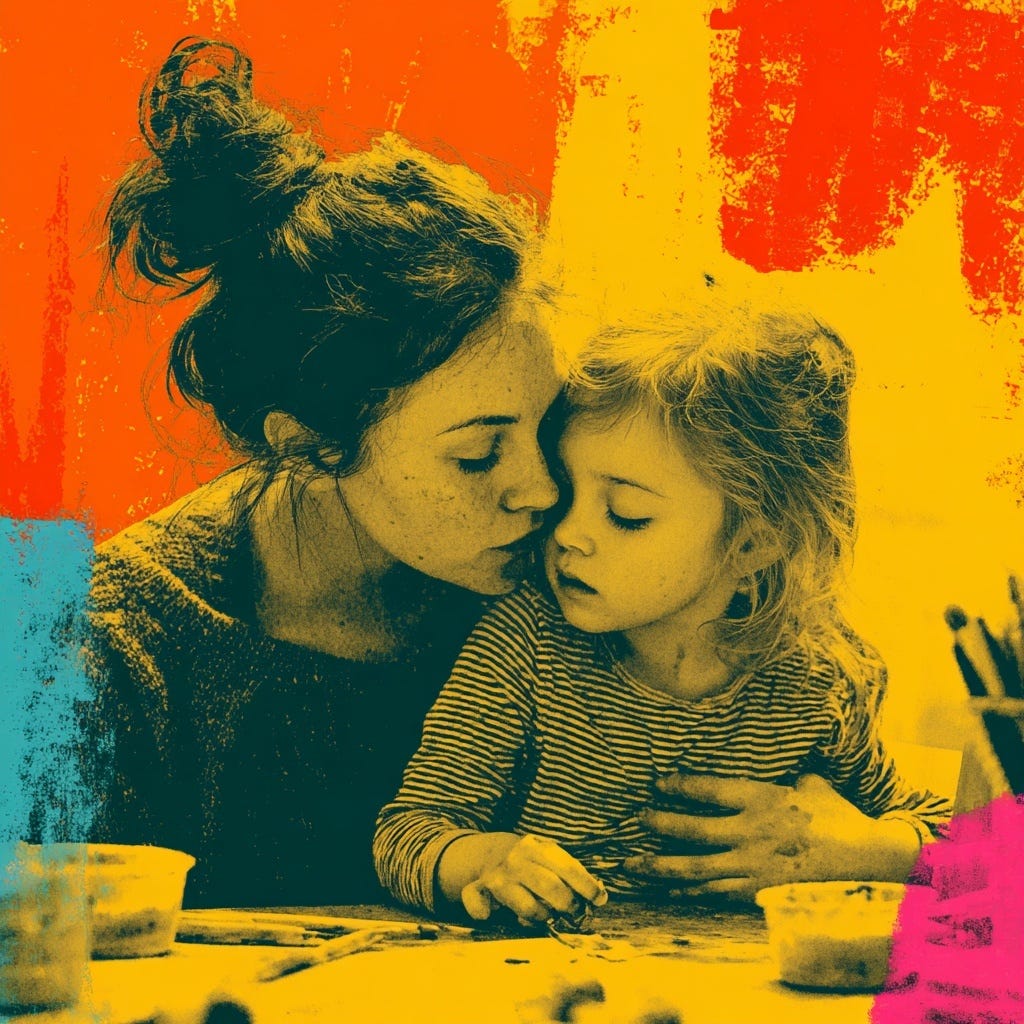
How might we create affordable, flexible, and emotionally nurturing child care systems that truly support every child and working family?
For many families today, child care is not a choice—it’s a necessity.
And yet, the systems we rely on often feel:
expensive
rigid
transactional
Parents are stretched.
Children are placed into environments that prioritize structure over emotional connection.
Somewhere along the way, we forgot something simple:
Child care is not just about supervision.
It’s about development, safety, and emotional well-being.
Seeing the Child as a Whole Being
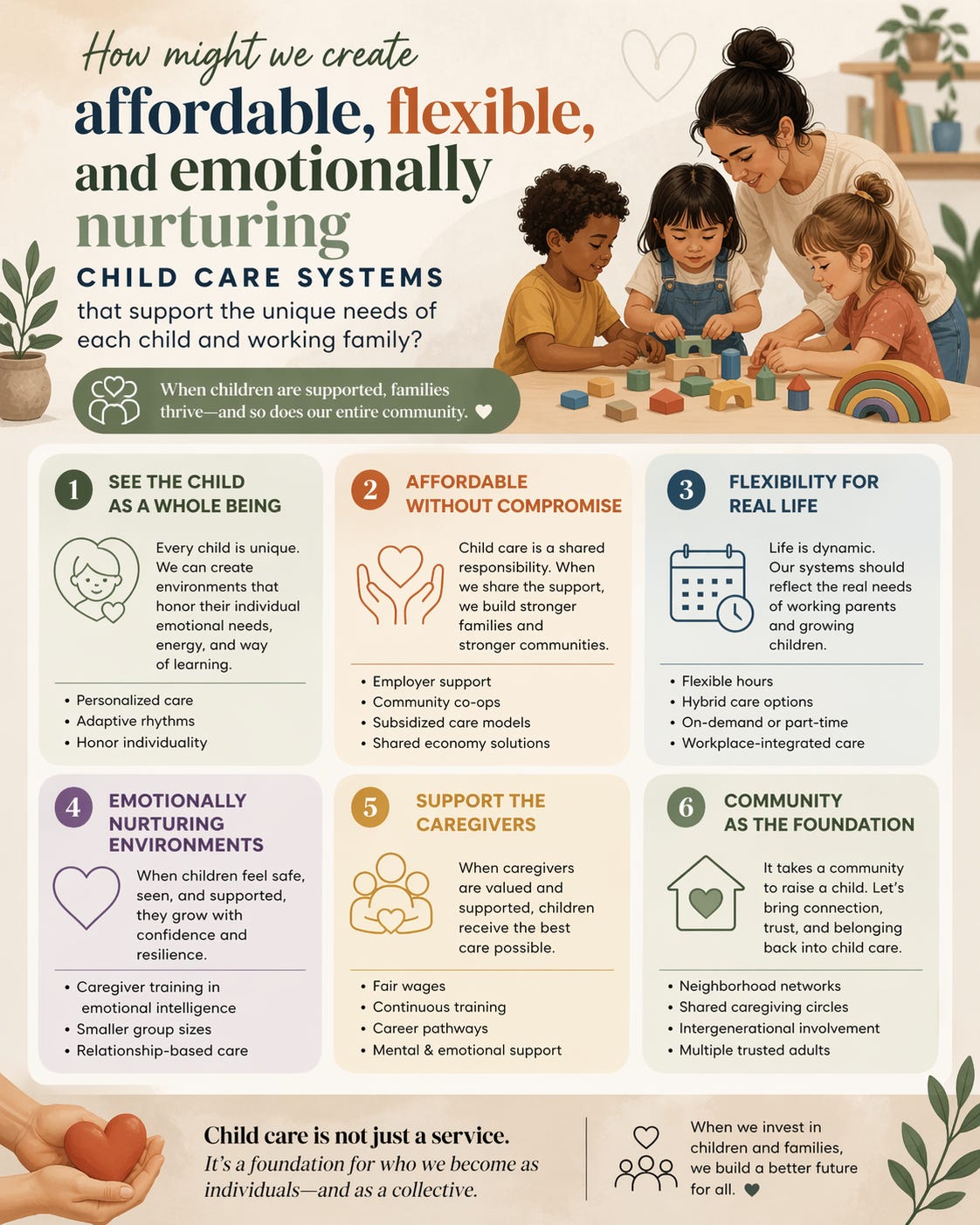
How might we design child care that sees each child not as a schedule to manage—but as a unique individual?
Every child has:
different emotional needs
different energy levels
different ways of learning and expressing
Instead of standardizing care, we can begin to:
👉 personalize environments
👉 adapt rhythms
👉 honor individuality
Affordability Without Compromise
How might we make child care accessible without sacrificing quality?
This requires a shift in how we view it:
👉 from private burden → to shared societal responsibility
Possibilities include:
employer-supported child care programs
community co-ops
subsidized care models
shared economy systems where families support each other
When care is shared, cost becomes lighter—and connection becomes stronger.
Flexibility for Real Life
How might we design systems that actually match how people live and work today?
Most current models assume:
fixed schedules
predictable routines
But real life is dynamic.
We can explore:
flexible hours
hybrid (in-person + remote support) care
on-demand or part-time options
workplace-integrated child care
Flexibility reduces stress—not just for parents, but for children too.
Emotionally Nurturing Environments
How might we create spaces where children feel:
safe
seen
supported
Caregivers are not just providers—they are emotional anchors.
This means investing in:
caregiver training in emotional intelligence
smaller group sizes
relationship-based care
When a child feels emotionally secure, everything else—learning, confidence, behavior—naturally improves.
Supporting the Caregivers
How might we better support the people who care for our children?
Child care workers are often:
underpaid
overworked
undervalued
Yet they play one of the most important roles in society.
We can begin to:
offer fair wages
provide continuous training
create career pathways
support their mental and emotional well-being
When caregivers are supported, children are supported.
Designing for Family, Not Just the Child
How might we support the entire ecosystem around the child?
Child care doesn’t exist in isolation.
Parents need:
trust
communication
partnership
We can design:
regular check-ins between caregivers and parents
shared updates on the child’s emotional and developmental state
spaces for parents to feel supported, not judged
Community as the Foundation
How might we bring community back into child care?
In many cultures, raising a child was never meant to be done alone.
We can reimagine:
neighborhood-based care networks
shared caregiving circles
intergenerational involvement
Children benefit from:
👉 multiple trusted adults
👉 diverse perspectives
👉 a sense of belonging
Technology as Support, Not Replacement
How might we use technology to support care without losing human connection?
Used well, technology can:
help parents stay connected during the day
provide updates and insights
improve coordination and scheduling
But it should never replace:
👉 presence
👉 attention
👉 human care
A New Vision
Imagine a system where:
child care is affordable and accessible
schedules are flexible and realistic
caregivers are valued and supported
children feel emotionally safe and nurtured
families feel connected and empowered
This isn’t just better child care.
It’s a healthier society.
Closing
If we truly believe that children are the future,
then how we care for them today matters more than anything.
Child care is not just a service.
It’s a foundation for who we become as individuals—and as a collective.
✨ Final Thought
How might we create systems that don’t just take care of children—
but help them feel seen, supported, and loved from the very beginning?