

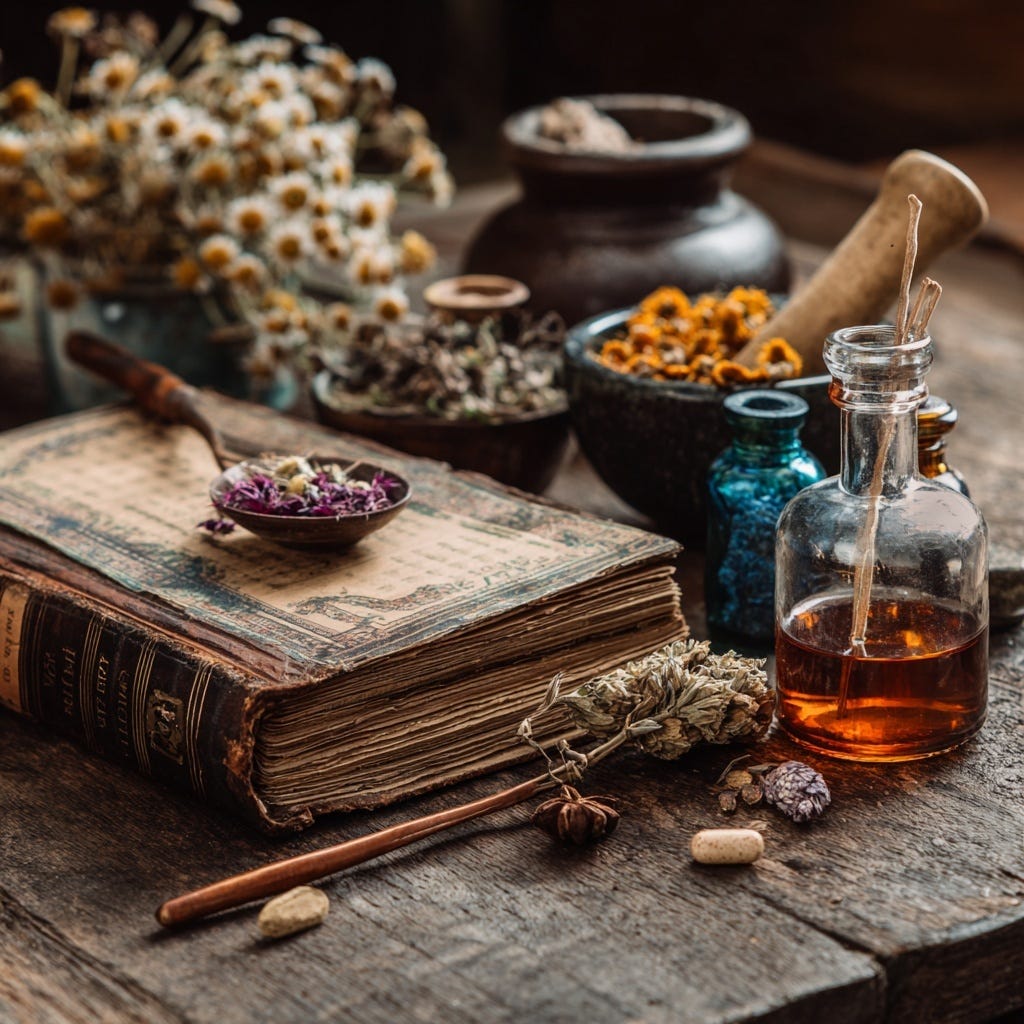
There’s a question that has been sitting with me for a while:
How might we integrate all forms of medicine—physical, emotional, energetic, and beyond—into a truly holistic way of healing?
The Limits of Symptom-Based Healing
In the world we live in today, most forms of medicine are designed to treat symptoms.
If something hurts, we reduce the pain.
If something is out of balance, we try to correct it.
This approach is necessary.
It saves lives.
It stabilizes the body.
But at the same time, something is missing.
Because often, the symptom is not the root.
My Experience With the Body
Through my own healing journey, I began to see this clearly.
What showed up physically was often connected to something deeper.
stress showing up as tension
emotions showing up as discomfort
unprocessed experiences showing up in the body
When I only addressed the physical layer, the relief was temporary.
But when I addressed:
the emotional
the mental
the energetic
Something shifted more deeply.
Healing Is Multi-Layered
What I’ve come to understand is this:
Healing does not happen on one level alone.
It happens across layers:
physical
emotional
mental
energetic
And each layer influences the others.
Expanding the Definition of Medicine
When we talk about medicine, we often think of:
prescriptions
treatments
procedures
But medicine can also include:
energy
light
sound
awareness
presence
These are not replacements.
They are complements.
Energy as a Foundation
Energy is the underlying layer of everything.
Before something becomes physical, it often exists as a pattern.
When that pattern is:
coherent → the system functions smoothly
disrupted → imbalance begins to form
Working with energy allows us to:
👉 support the system before it becomes more serious
Light and Sound
Light and sound are also powerful forms of support.
Light can influence:
mood
rhythm
biological processes
Sound can:
regulate the nervous system
shift emotional states
create coherence in the body
Even simple practices like:
music
chanting
breath
Are forms of this.
The Role of Awareness
One of the most overlooked forms of medicine is awareness.
When someone becomes aware of:
their emotions
their patterns
their body
They gain the ability to:
👉 respond instead of react
This alone can shift a lot.
Integration, Not Replacement
The goal is not to replace one system with another.
It’s to integrate.
To allow:
Western medicine
Eastern practices
energy healing
psychological work
To work together.
Different People, Different Needs
Not everyone responds to the same approach.
Some people need:
structure
clear diagnosis
physical intervention
Others benefit more from:
emotional processing
energy work
awareness practices
And most people need a combination.
Personalizing Healing
This is where healing becomes more effective.
Instead of:
👉 one method for everyone
We move toward:
👉 what supports this person, at this time
My Approach
In my own work, I don’t see healing as a fixed method.
I see it as:
listening
sensing
adjusting
Sometimes the body needs:
rest
grounding
physical support
Other times, it needs:
emotional release
energetic alignment
space to process
The Role of Presence
What I’ve found is that presence ties everything together.
When someone feels:
safe
supported
not judged
Their system relaxes.
And from that place, healing becomes possible.
Beyond the Individual
This conversation doesn’t stop at the individual level.
As more people explore different forms of healing, there is an opportunity to rethink systems.
To ask:
how can these approaches coexist?
how can they support each other?
Moving Toward Totality
A truly holistic approach does not separate.
It recognizes:
the body as a system
the person as a whole
healing as a process
What This Could Look Like
In a more integrated model, someone might:
see a doctor for physical support
work with a therapist for emotional processing
use energy healing for regulation
practice meditation for awareness
All working together.
The Challenge
One of the challenges is that different systems speak different languages.
science
spirituality
psychology
They don’t always overlap easily.
But that doesn’t mean they can’t.
A Gradual Shift
This kind of integration won’t happen overnight.
It requires:
openness
collaboration
willingness to learn
From both practitioners and individuals.
Closing
If there’s one thing I’ve learned, it’s this:
Healing is not about choosing one path.
It’s about understanding what works together.
When we begin to see healing as:
layered
interconnected
adaptive
We move closer to something more complete.
Not just treating symptoms.
But supporting the whole person.
If this resonates, I’d love to hear what forms of healing have supported you the most ✨
I love how you laid all of this out so clearly. It makes so much sense.