

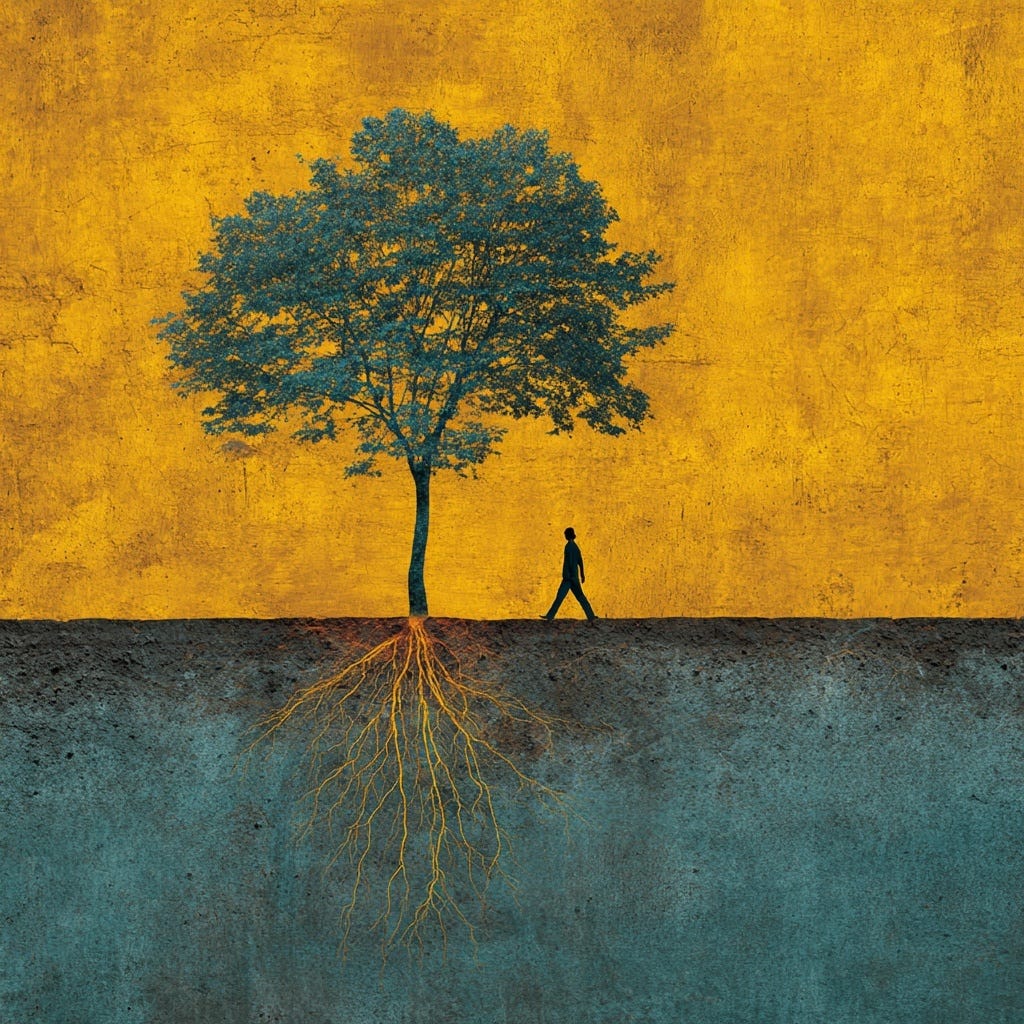
There are certain questions that don’t have simple answers.
Questions that live at the intersection of history, identity, pain, and power.
One of them is this:
How might we move beyond systems built on dominance, separation, and entitlement?
Naming What Exists
Before anything can shift, it has to be acknowledged.
Across the world, and across history, we’ve seen systems shaped by:
white supremacy
racism
colonialism
religious fundamentalism
patriarchy
toxic masculinity
homophobia and transphobia
ableism
These are not just ideas.
They are patterns.
Structures.
Ways of thinking that have influenced how people relate to each other for generations.
Not Just “Out There”
It’s easy to think of these systems as something external.
Something “out there” in society.
But part of the work is recognizing:
They also live within us.
In subtle ways:
how we judge
how we compare
how we separate
how we assign value
Not because we chose them consciously.
But because we were shaped by them.
The Healing Perspective
From a healing perspective, these systems are not just political or social issues.
They are also:
👉 energetic patterns
👉 emotional imprints
👉 inherited beliefs
They are reinforced by:
fear
insecurity
the need for control
Separation as the Root
At the core of many of these systems is one idea:
separation
The belief that:
some people are better
some people are less
some people deserve more
This creates:
hierarchy
division
disconnection
The Opposite Is Not Just Equality
While equality is important, the deeper shift goes beyond that.
It moves toward:
👉 recognizing shared humanity
Not as a concept.
But as an experience.
The Role of Awareness
Real change begins with awareness.
Not in a way that creates guilt or blame.
But in a way that creates understanding.
Asking:
Where did I learn this belief?
How does it show up in me?
How does it affect how I treat others?
This is not always comfortable.
But it’s necessary.
Emotional Work Is Part of It
These systems are sustained by unprocessed emotions.
fear
anger
shame
grief
If these emotions are not acknowledged, they get projected outward.
Into:
judgment
control
exclusion
So part of the work is:
👉 learning how to feel
👉 learning how to process
👉 learning how to stay present
Love With Discernment
Love is often talked about as the solution.
But love alone, without clarity, is not enough.
What’s needed is:
👉 love with discernment
Which means:
being compassionate
while also recognizing harm
being open
while also holding boundaries
From Dominance to Connection
Moving beyond dominance-based systems requires a shift in how we relate.
From:
control → connection
hierarchy → collaboration
entitlement → responsibility
This is not just a societal shift.
It’s a personal one.
The Role of Community
Change does not happen in isolation.
It happens in relationship.
Through:
conversation
listening
shared experiences
Community allows us to:
see different perspectives
challenge our assumptions
grow together
Creating New Patterns
It’s not enough to dismantle old systems.
We also need to create new ones.
Based on:
unity
compassion
kindness
empathy
collaboration
coordination
service
These are not abstract ideals.
They are daily practices.
What This Looks Like in Practice
It can be simple.
Choosing to:
listen without interrupting
speak with honesty and care
acknowledge someone else’s experience
reflect on your own reactions
These small actions build new patterns.
The Role of Healing Work
Healing work supports this shift.
Not by forcing change.
But by creating space.
When people feel:
safe
seen
supported
They are more open.
More willing to:
reflect
change
connect
My Role in This
I don’t see myself as someone who has all the answers.
But I do see my role as:
creating space
supporting awareness
helping people reconnect with themselves
Because when someone is connected to themselves, they are less likely to:
act from fear
act from control
act from separation
A Long-Term Process
This is not something that changes overnight.
These systems have been built over generations.
They will take time to shift.
But change is already happening.
In small ways.
In conversations.
In choices.
Closing
If there’s one thing I’ve learned, it’s this:
The world changes when people change how they relate—to themselves and to each other.
Not through force.
Not through perfection.
But through:
awareness
compassion
responsibility
And a willingness to do the work.
If this resonates, I’d love to hear what shifts you’ve noticed—in yourself or in the world around you.